

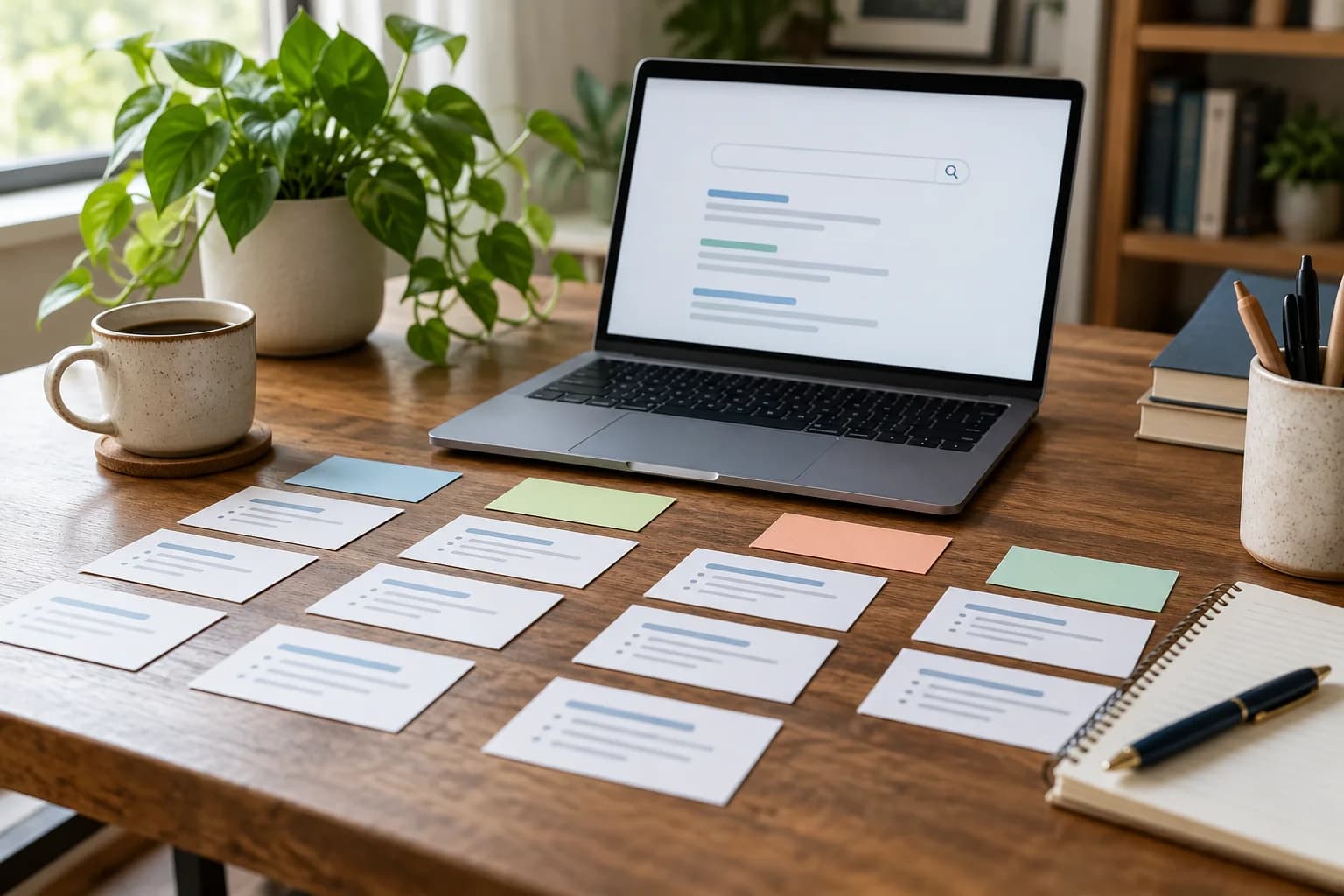
A useful content plan begins with the questions people ask before they choose a product or service. Search terms can help reveal those questions, but a list of phrases is not yet an editorial strategy. Each article needs a clear reader, a specific problem, and an answer that helps someone make progress without forcing them through repeated sales language.
Collect questions from actual conversations
Ask the people handling enquiries which questions recur, which assumptions cause confusion, and what information customers need before agreeing a scope. Group the questions by decision: understanding the problem, comparing approaches, preparing a project, or using the result. This creates a starting point grounded in your business rather than a calendar filled with loosely related popular topics.
Match the question to a page purpose
Use a service page to explain what your business offers and an article to explore a related question in more depth. For example, a web development page can connect to a guide about preparing a website brief. Avoid publishing several near-identical articles that all answer the same question with slightly different phrases. If an existing page already does the job, improve it instead of creating another version.
Make the answer useful on its own
Write the direct answer early, then develop the steps, trade-offs, and examples needed to apply it. Explain what a reader should bring to a discussion or check in their own situation. Identify hypothetical examples as examples and avoid inventing project results to make the article sound authoritative. Google’s guidance emphasises content created to help people; a character count alone is not a ranking strategy.
Connect the next relevant resource
Link to related articles when they answer a natural follow-up question. Use descriptive link text so a reader can predict the destination. Include a relevant service link where it helps someone move from learning to discussing a project. Internal links should explain relationships between useful pages, not repeat the same keyword throughout every paragraph.
- One primary reader question per article.
- A clear answer and practical next step.
- Relevant examples without unsupported claims.
- Links to the service and genuinely related reading.
- An owner responsible for future corrections.
Review usefulness after publication
Look at which pages attract relevant visitors, what questions still reach your team, and whether readers continue to appropriate next steps. Search visibility takes time and depends on more than the article itself. Check for outdated guidance, broken links, and duplicated information during regular reviews. Update the substance when it needs improvement rather than changing the date just to make a page appear fresh.
Build your first content plan from customer questions and connect each article to a useful next step. Publish only when the page offers a distinct answer worth reading.
See how our digital marketing service can help