
A minimum viable product is easier to scope when the team agrees what someone should be able to accomplish with it. A short feature list is not enough: the first release needs to support a complete, useful journey. Start with one audience and one meaningful task, then work backwards to the capabilities required to finish it.
Describe the first successful use
Write a concrete example of a person completing the task. For a booking app, success might mean selecting a service, finding an available time, reviewing the details, and receiving confirmation. Include what happens immediately before and after the app interaction. This reveals dependencies such as an availability source, an administrator, or a confirmation process that a screen-only plan can miss.
Separate essential steps from enhancements
For each proposed feature, ask whether the chosen journey fails without it. A simple confirmation may be essential; a rewards programme may be useful later. Put deferred ideas into a visible backlog rather than quietly forgetting them. Record why a feature is deferred and what evidence would justify adding it. This keeps scope decisions connected to the product goal rather than to who argued most strongly.
Include the unglamorous parts of the journey
Account recovery, empty states, invalid entries, failed requests, and support contact routes are easy to omit from an early plan. Yet they shape whether people can use the app without assistance. Define the expected behaviour when information is missing or an external service is unavailable. An MVP can have limited functionality while still treating these situations carefully.
Prototype before committing to every screen
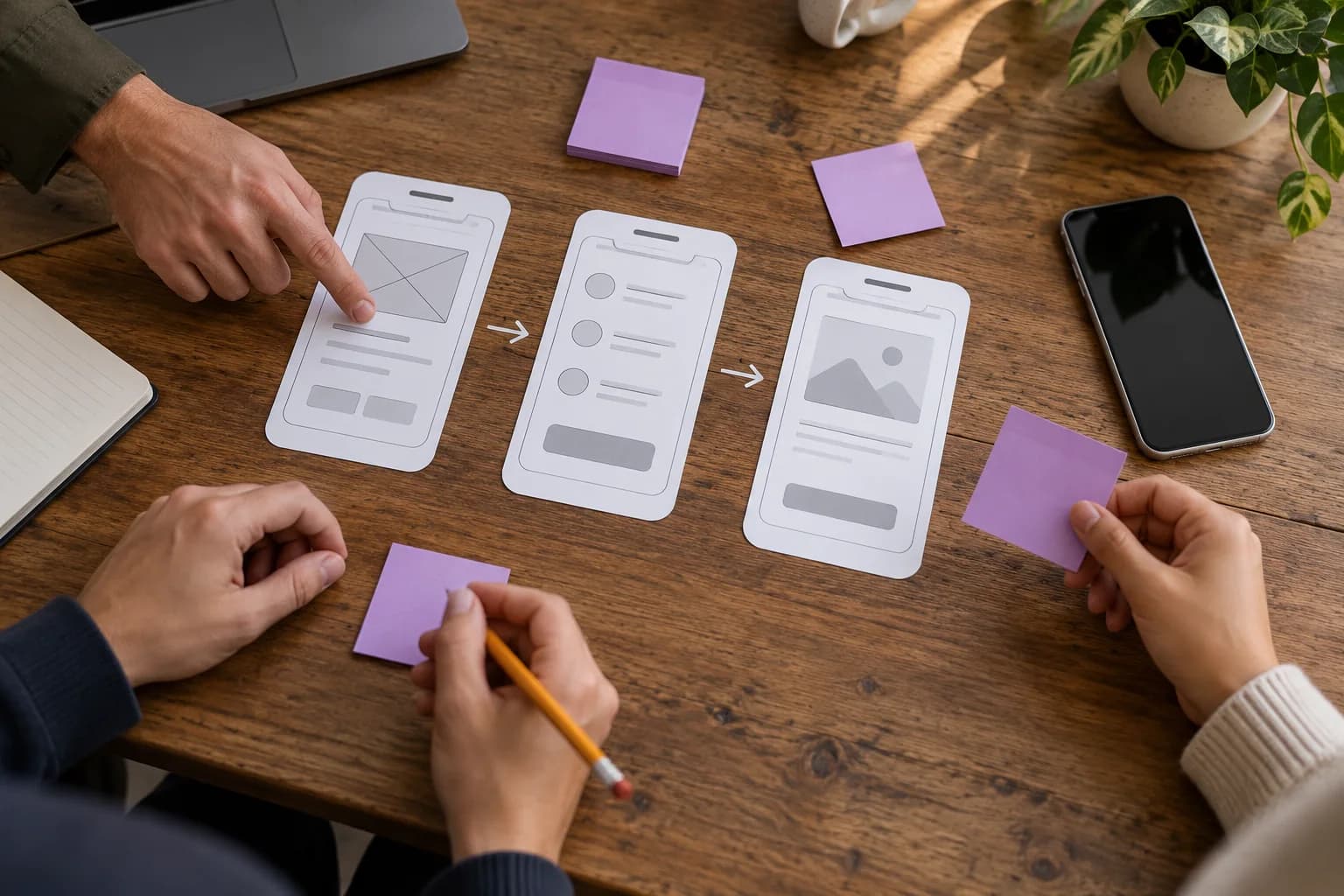
Use a simple clickable prototype to test the sequence and wording of the main journey. Give representative users a task without explaining every control. Observe where they hesitate, what they expect next, and whether they understand the confirmation. A prototype does not prove the technical implementation, but it can expose misunderstandings before a larger development commitment.
- Name the primary user and task.
- Define the first completed journey.
- List external systems and operational owners.
- Document failure and recovery states.
- Agree which decisions the prototype should clarify.
Choose learning goals for the release
Decide which observations will guide the next version. These may include task completion, the point where users stop, repeated support questions, or whether people return for the same task. Avoid collecting large amounts of data without a decision it will support. Pair usage signals with conversations so you can understand why an interaction succeeds or fails.
A strong MVP brief explains the user, the complete task, essential dependencies, and what the first release should teach you. The backlog comes after that shared understanding.
See how our app development service can help